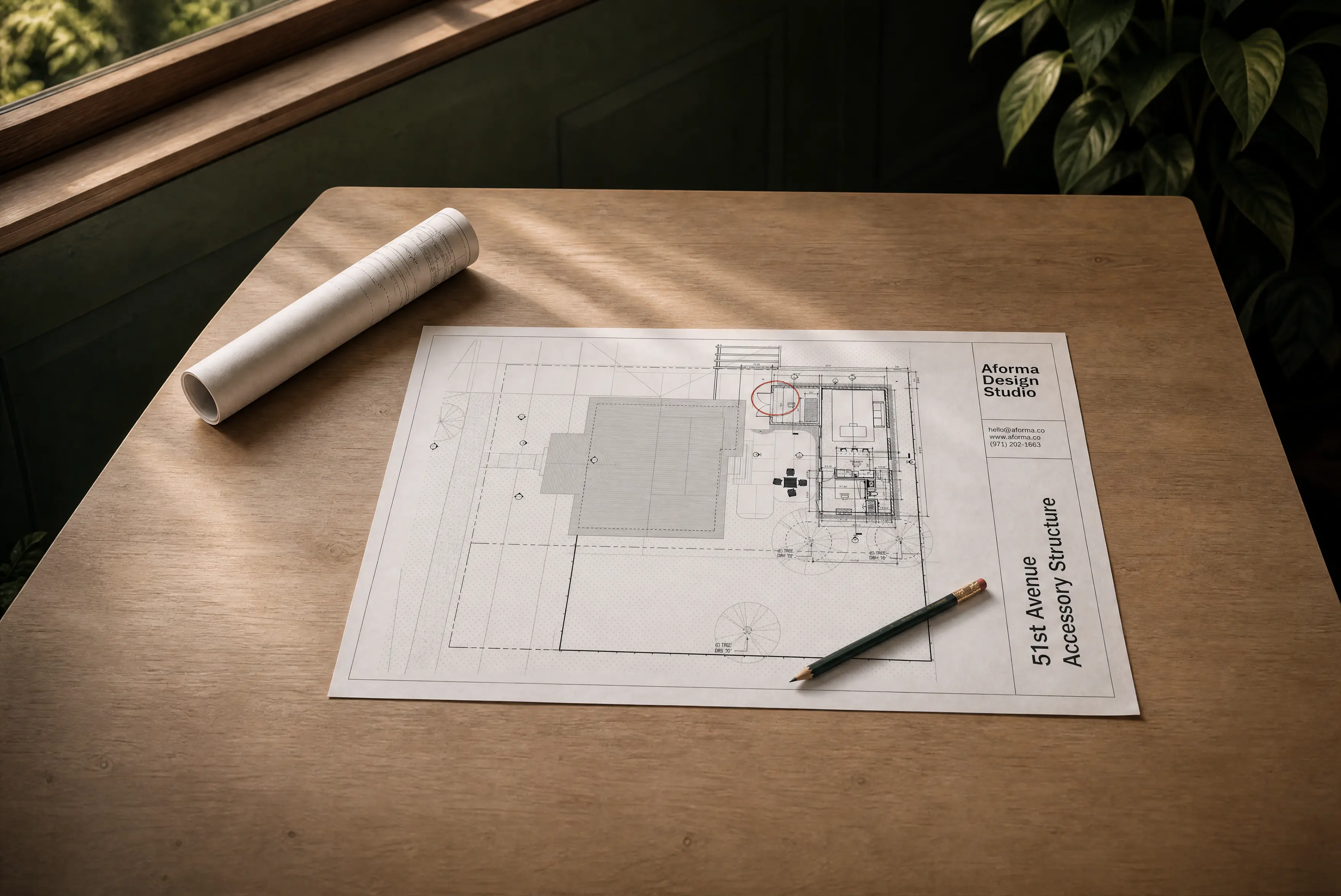
Most delays don't start in the field. They start weeks earlier, in a drawing set that looked finished but wasn't. When a detail is left unresolved, the crew doesn't find out at the desk. They find out on site, and the whole job stops while someone chases an answer.
Incomplete sets rarely fail all at once. They fail in small interruptions: an RFI here, a permit comment there, a field decision that should've been settled during design. None of these look like a problem in review. They only become one once someone with a tool in their hand tries to build from them.
Where the gaps actually hide
A set can be 90 percent complete and still stop a crew cold, because the missing 10 percent clusters exactly where work happens.
- A detail that stops short of showing how two materials actually connect
- A dimension that can be read two different ways
- A callout pointing to a detail that was never drawn
- Finishes still marked "TBD" long after the crew needs them
- Sheets that quietly disagree with each other
What it actually costs
RFIs and waiting.
Every unresolved detail becomes a question up the chain. Work sits idle until it's answered. A single missing callout can cost days.
Change orders.
What could've been fixed on paper for an hour's coordination becomes a field fix, at field rates, often with an unhappy client watching.
Permit delays.
On the West Coast, review already runs long. 120 days in Los Angeles, 200-plus in San Francisco. An incomplete set that bounces back for a second review doesn't just cost the review time. It resets the whole schedule.
What "build-ready" actually means
Build-ready isn't a fancier tier of drawing. It's a different mindset. A set made by someone who thought all the way through to construction, not just to approval.
- Resolves every connection, not just the typical ones
- Coordinates across sheets, so nothing contradicts anything else
- Anticipates the build sequence
- Leaves nothing labeled "TBD" that the crew will need
- Reads clearly enough that a sub can price and build from it without guessing
The test is simple: could your crew build the whole project from this set without stopping to ask what you meant? If not, it isn't done. It's a delay with a start date.
Why who draws it matters
A drawing made by someone who has only ever drawn is a different document than one made by someone who's stood on a site at 7am trying to build from a set that didn't quite work. We've been on the build side. That's what changes which details we sweat: the clearance that's technically fine but miserable to install, the sequence that reads right on paper and fights the crew in real life. Those are the gaps you only learn to close by having had to fix them yourself.
Protecting your timeline before the build starts
- Define "done" up front. The gap between your definition and your drafter's is where surprises live.
- Coordinate before you submit. Catch conflicts on paper, where they cost an afternoon, not on site, where they cost a change order.
- Start from accurate existing conditions. Every drawing downstream inherits the accuracy of the survey.
- Work with a partner who's built. The best predictor of a build-ready set is whether the person drawing it understands how it actually gets built.
An incomplete set is the cheapest problem to fix on paper and the most expensive to discover in the field.


